
High-Content Screening Applied to CB₂ Cannabinoid Receptor Ligand Binding
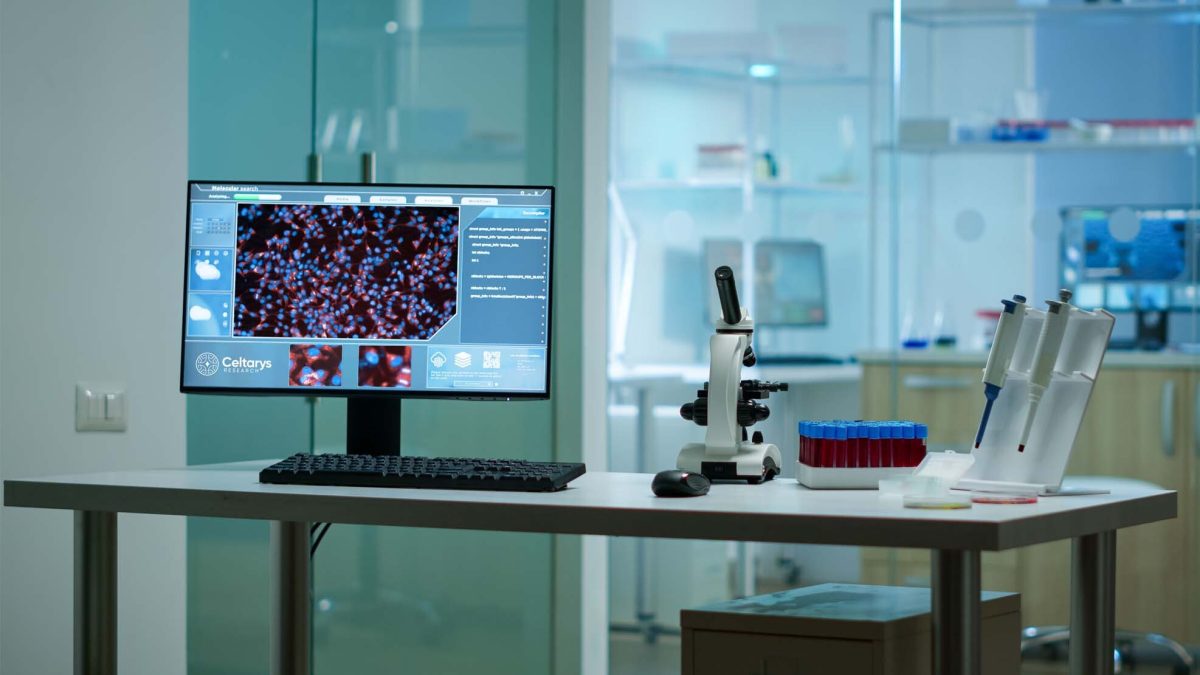
The Endocannabinoid System (ECS) represents one of the most compelling and complex target classes in modern pharmacology. Central to this system are the cannabinoid receptors in the body, specifically CB1 and CB2. Particularly, the CB2 receptor has emerged as a high-priority therapeutic target due to its primary role in immune modulation and inflammation control. The development of novel CB2 ligands requires robust, high-throughput, and physiologically relevant assays. Traditional binding assays often fall short of meeting these requirements, necessitating the adoption of advanced cell imaging technologies. High-content screening (HCS), coupled with innovative fluorescent probe chemistry, offers a powerful, multi-parametric approach to accurately quantify CB2 receptor ligand binding and its downstream effects in a native cellular environment.
Pitfalls in CB2 Ligand Binding Assays for Drug Discovery
Traditional ligand binding assays for the CB2 cannabinoid receptor, predominantly reliant on radioligands in membrane preparations, face significant limitations in drug discovery.
- Loss of physiological context: Membrane preparations remove the CB2 receptor from its native lipid environment and regulatory protein associations, which can significantly destabilize its structure and affect the ligand affinity. Receptor stability depends strongly on precise buffer conditions, temperature, and protease inhibitors, making the assay highly susceptible to technical variability.
- High nonspecific binding: Many CB2-targeting molecules are highly lipophilic. This lipophilicity increases nonspecific binding to plastics, filter membranes, or lipid-rich assay components, leading to elevated background signals and often resulting in artificially high estimates for CB2 receptor ligand binding affinity.
- Challenges in selectivity: The close sequence homology between CB1 and CB2, particularly in their transmembrane regions, makes achieving subtype selectivity difficult. High nonspecific binding is further complicated by this homology, making cross-reactivity common.
- Probe-dependent reliability: Assay performance is heavily dependent on the selection of the labeled probe. Tracers with insufficient selectivity or applied at saturating concentrations can obscure competitive displacement by test compounds, reducing the reliability of IC50 and binding affinity determinations.

Figure 1. Bhattacharjee P, Iyer MR. Rational Design, Synthesis, and Evaluation of Fluorescent CB2 Receptor Ligands for Live-Cell Imaging: A Comprehensive Review. Pharmaceuticals (Basel). 2023 Aug 31;16(9):1235
Leveraging High-Content Screening to Quantify CB2 Ligand Binding
High-content screening (HCS) is a paradigm shift in cellular assay design, blending automated high-content microscopy with sophisticated image processing. High-content cell imaging captures multi-channel fluorescent images of entire cell populations, allowing for the quantification of hundreds of morphological and intensity features at the single-cell level. When applied to the challenging field of CB2 receptor ligand binding, HCS provides several key methodological advantages.
Unlike traditional methods, an HCS assay is performed on whole, intact cells, preserving the native receptor state, including post-translational modifications and association with secondary signaling partners. High-content analysis can then precisely quantify the amount of fluorescent ligand bound to the receptor, often measured as mean pixel intensity or total fluorescent volume localized to the membrane or cytoplasm. The ability of the high-content analysis system to segment thousands of individual cells per well allows for statistical rigor and the detection of sub-population responses, revealing phenotypic variability that bulk assays completely mask. This quantitative power, delivered by specialized high-content screening instruments, enables the simultaneous measurement of compound affinity (IC50, Ki) and functional readouts such as receptor internalization, providing a comprehensive profile of the ligand’s interaction dynamics.
Advantages of HCS Over Traditional Methods in CB2-Focused Research
The shift toward high-content screening system platforms fundamentally elevates the quality and relevance of CB2 receptor ligand binding studies.
- Safety and throughput: By eliminating the need for radioisotopes, HCS removes regulatory hurdles and simplifies the workflow, drastically accelerating the throughput required for screening large compound libraries.
- Multiparametric profiling: Beyond simple binding affinity, HCS can simultaneously assess receptor number, cell viability, cytoskeletal changes, and even functional activation state. This is crucial for distinguishing between neutral antagonists, inverse agonists, and partial agonists, pharmacological nuances that traditional binding assays often fail to resolve.
- Translational relevance: Performing the assay in a whole-cell environment provides data that better correlates with in vivo activity. This is particularly important for targets like cannabinoid receptors in the brain, where membrane dynamics and localization heavily influence function. The visual confirmation provided by high-content imaging examples (like the visualization of CB2 internalization) increases confidence in lead identification.
- Scalability and robustness: Modern high-content screening instruments incorporate advanced liquid handling and environmental controls, minimizing the technical variability (batch effects) that plague older methodologies. This ensures data reproducibility, which is essential when advancing candidates toward clinical development.

Combining High-Content Imaging and Fluorescent Ligands for GPCR Targeting
The true power of the HCS approach for GPCRs, including the cannabinoid receptors, is realized when it is integrated with highly optimized fluorescent ligands. Fluorescent ligands are synthetic probes designed with specific selectivity and affinity that bind directly to the target receptor site. These probes overcome the limitations of non-specific dyes by providing a direct, high-fidelity readout of ligand engagement.
High-content imaging systems are optimized to detect the distinct fluorescent signal emitted by these probes, even at low concentrations. This setup is particularly effective for cannabinoid receptors in the human body due to the need for high-resolution discrimination, especially when comparing the relatively restricted CB1 receptor location (neuronal and glial) with the broader peripheral expression of CB2. The resulting data can not only confirm binding but also visualize the localization of the ligand-receptor complex. For instance, an agonist’s binding can be followed by the internalization of the receptor-ligand complex, a crucial mechanistic parameter that can be easily quantified by high-content imaging systems that track fluorescence movement from the cell surface into endosomal compartments. This capacity to study dynamic events in real-time or fixed cells delivers a much richer understanding of receptor pharmacology than simple equilibrium assays.
The future of cannabinoid drug discovery, particularly for non-psychoactive targets like CB2, depends on assays that are information-rich, scalable, and physiologically accurate. By utilizing specialized high-content screening platforms, researchers can generate the complex, high-quality data necessary to accelerate the translation of promising leads into therapeutic realities.
Celtarys offers a specialized high-content screening workflow for CB2 that integrates live-cell high-content imaging with a proprietary CB2-selective fluorescent ligand. Our platform delivers both quantitative readouts (IC₅₀, Kᵢ, displacement curves) and high-resolution images that confirm receptor engagement and localization. With fast turnaround times, single-site execution, and a rigorously validated methodology, the service provides a reliable, multiparametric dataset that accelerates decision-making in cannabinoid drug discovery.
If you need precise and actionable CB2 data, Celtarys’ HCS platform is ready to support your next study. Contact us!
References
Bhattacharjee P, Iyer MR. Rational Design, Synthesis, and Evaluation of Fluorescent CB2 Receptor Ligands for Live-Cell Imaging: A Comprehensive Review. Pharmaceuticals (Basel). 2023 Aug 31;16(9):1235. doi: 10.3390/ph16091235
Ge H, Ji B, Fang J, Wang J, Li J, Wang J. Discovery of Potent and Selective CB2 Agonists Utilizing a Function-Based Computational Screening Protocol. ACS Chem Neurosci. 2023 Nov 1;14(21):3941-3958. doi: 10.1021/acschemneuro.3c00580
Raïch I, Rivas-Santisteban R, Lillo A, Lillo J, Reyes-Resina I, Nadal X, Ferreiro-Vera C, de Medina VS, Majellaro M, Sotelo E, Navarro G, Franco R. Similarities and differences upon binding of naturally occurring Δ9-tetrahydrocannabinol-derivatives to cannabinoid CB1 and CB2 receptors. Pharmacol Res. 2021 Dec;174:105970. doi: 10.1016/j.phrs.2021.105970
Related posts
Picking an E3 Ligase Assay: FP, TR-FRET, ELISA, NanoBRET and More

PROTAC Hook Effect: How E3 Ligase and Target Protein Binding Affinity Shapes Degradation Efficiency



VHL, CRBN, and Emerging Ligases like DCAF: Selecting E3 Ligase Handles for PROTAC Drug Discovery



PERTE SALUD Proyecto Nº: IDI-2025-0751
Título: TERAPIAS AVANZADAS EN INMUNOONCOLOGÍA: UNA ESTRATEGIA INNOVADORA
BASADA EN LA DEGRADACIÓN DIRIGIDA DE GPCR EN EL EJE ADENOSINÉRGICOS

EIC Pathfinder; Project name: Unisens; Universal GPCR Activity Sensor for Next Generation Drug Discovery


Esta entidad fue beneficiaria de las ayudas para la ejecución de acciones de promoción exterior de las empresas gallegas. El objetivo principal de estas ayudas es incentivar la realización de acciones de promoción exterior generadoras de ventajas competitivas. El resultado que se pretende conseguir es el impulso de las pymes y sus productos y servicios, aumentando el número de empresas de base exportadora.
Celtarys Research is beneficiary of a WomenTechEU grant supporting deep-tech start-ups led by women


Principia 2021 Program
Celtarys staff has been funded by the Xunta de Galicia within the framework of the PRINCIPIA 2021 Program of the Galician Innovation Agency (GAIN)
InnovaPEME Program
Celtarys Innovation Plan has been funded by the InnovaPEME 2022 program of the Galician Innovation Agency (GAIN)

Bonos de Innovación de Celtarys Research (026)
Para promover o desenvolvemento tecnolóxico, a innovación e unha investigación de calidade. Esta operación está financiada pola Xunta de Galicia, a través de axudas concedidas pola Axencia Galega de Innovación, dentro do programa de axudas a empresa Bonos de innovación 2022.


Celtarys Research is part of the public-private consortium developing the project PREDICTEAM
New prognostic quantitative biomarker assays for predicting patient response to immune checkpoint inhibitor (ICI) treatment


NEOTEC · CDTI — Ministerio de Ciencia e Innovación
The Project ‘New chemical conjugation technology for therapeutic targets’ has been founded by CDTI under its program NEOTEC. The NEOTEC program objective is supporting the establishment and consolidation of technology-based enterprises. A technology-based company (EBT) is a company whose activity focuses on the exploitation of products or services that require the use of technologies and knowledge developed since the research activity. The EBT base their business strategy or activity in the intensive domain of scientific and technical knowledge. Budget awarded: 416.177€ | Execution dates: 1/1/2023 – 31/03/2024